Yourpharmacistisyourmostvaluable resource.
Nowthereisawaytoprotectthat time.
The AI Technician that works across your PMS and every application in your workflow, powered by Sonet's production-proven platform.
WHAT IS PAT?
PAT is an AI Technician that drives your pharmacy management system through the screen, the same way your best technician does.
No APIs, no changes to your PMS, nothing new at your pharmacy. PAT automates the workflows eating your pharmacist's time, under HIPAA-grade governance, with the pharmacist in the loop at every clinical decision.
2 hrs
per pharmacist, per day
recovered for patient care when PAT handles the administrative workflow
THE PROBLEM
Your pharmacist should be with patients.
Right now, the 4 a.m. fill queue is waiting for the first person through the door.
Half of every pharmacist's day goes to work that doesn't require a pharmacist.
- 48% of pharmacist time lost to verification and data entry
- 75% say they don't have enough time for clinical duties as a result
You can't hire your way out of this.
- 70%+ of community pharmacies can't fill open tech positions
- Vacancy rates as high as 40% at some facilities
- 89% of pharmacy executives say pharmacists are filling tech shifts
- Replacing one technician costs $25,000 to $35,000
Your staff keep their terminals. PAT works from the cloud.
- Most AI automation runs on your workstations, locking your team out while the bot works
- PAT connects over an encrypted tunnel and drives the PMS from the cloud
- Your pharmacists and techs work their terminals normally. PAT works in parallel.
Sources: JAPA 2019; APhA National Workplace Survey, 2021; NCPA 2022 Survey; ASHP 2024 Midyear Clinical Meeting; NCPA 2022 Digest; Surescripts 2023 National Progress Report.
USE CASES
These are just the starting point.
PAT automates across your entire pharmacy workflow.
e-Rx Entry
- Receives incoming electronic prescriptions and enters them into the PMS accurately
- Handles high-volume e-Rx queues without competing for pharmacist or technician workstations
- Queues every completed entry for pharmacist verification before dispensing
Refill Processing
- Processes refill requests from queue through PMS entry without technician intervention
- Batches med-sync refills for pharmacist review on schedule
- Keeps the refill queue moving during peak hours without pulling clinical staff into data entry
Med Sync
- Flags patients who are candidates for sync based on their maintenance medications
- Lines up fill dates and queues the refills a few days ahead so everything is ready on one pickup day
- Routes any refill gap, prescriber follow-up, or partial-fill decision to the pharmacist to approve
And that's not all
PAT learns your pharmacy's workflows. If your team does it repeatedly, PAT can do it with pharmacist-in-the-loop.
The Shift
More pharmacist time available for clinical work starting with the workflows PAT handles first
Today
With PAT
These are projections based on published industry benchmarks and modeled assumptions, not measured Sonet deployment results. Request a demo for a pharmacy-specific analysis.
HOW SONET WORKS
See. Think. Act. Through the screen.
SEE
- Reads PMS screens in real time
- Prescription records, patient profiles, insurance fields
- No backend access or API required
THINK
- Follows the approved task logic step by step
- Validates required fields and flags anything incomplete
- Prepares every entry for pharmacist review
ACT
- Navigates PMS interface and routes items for review
- Every keystroke captured in a session log
- Clinical decisions always belong to the pharmacist
The pharmacist is always in the loop. PAT provides structured outputs. The pharmacist reviews every recommendation and approves every decision. This is a compliance feature, not a limitation.
TASKS
PAT runs on tasks. Written in plain English. Owned by you.
A task is the end state you want plus every step to get there, written the way you'd write standard operating procedures for a brand new technician. No code. No developer translating your process into something you can't read.
- 1.Open the fill request queue and select the next e-Rx.
- 2.Verify patient, prescriber, and drug fields are complete.
- 3.Select the drug using inventory first, then cost, then patient preference.
- 4.If you see a message saying equivalent Rx with day supply, place the prescription on hold.
- 5.Queue the completed entry for pharmacist verification.
An actual task reads like this. Your team can edit any line.
You can read it. So you can fix it.
Every instruction is a sentence, not a script. "If you see a message saying equivalent Rx with day supply, place the prescription on hold." When something needs to change, you edit the line. You never wait on a developer to find the problem in the code.
No memory. No training on your data. No drift.
PAT is stateless. It is never trained on your patients, your prescribers, or your pharmacy. It loads the task, follows every step, and forgets everything when the task ends. That protects patient data, and it means the work runs the same way every time. Humans drift. Trained AI drifts. A task followed step by step does not.
One AI Technician. As many tasks as you need.
Adding a workflow does not mean buying and training another single-purpose bot. Refills, e-Rx, future fills, reports: each is a task, and any AI Technician can run any of them. New workflow, new task. That's it.
When PAT hits something it doesn't recognize, you know.
An unfamiliar pop-up or a missing field doesn't strand a prescription in a queue nobody watches. PAT skips the item, moves to the next one, and notifies your team with the reason. Your team adds the logic, and coverage grows week over week. The judgment calls stay with your pharmacists.
Show PAT the workflow once.
Walk through the process on screen while it's recorded. PAT drafts the task from the recording, you review it in plain English, and your team refines it until it matches exactly how your pharmacy works. Because if you've been in one independent pharmacy, you've been in exactly one independent pharmacy.
Nothing runs without your approval. No task is loaded, scheduled, or billed until you've reviewed it.
See a task run in your PMS →PLATFORM
Not a standalone tool.
A platform already in production.
PAT runs on top of Sonet's enterprise-grade, cloud-native platform, already deployed with pharmacies today. It connects to your existing PMS over an encrypted tunnel. Nothing at your pharmacy changes. No new software. No new hardware. No changes to your PMS.
If your pharmacy technician can use your PMS, PAT can drive it, in days, not months.
THE OLD WAY
Procure device
Install software
Configure system
Train staff
Test integration
Coordinate vendor
Go live (maybe)
Weeks to deploy
WITH PAT
Connect encrypted tunnel
Demonstrate workflow
Review configuration
Go live
Operational in days
WORKS WITH YOUR PMS
Available today


Coming soon




If your technician can use it, PAT can drive it.
WHY PAT
Other tools automate tasks.
PAT governs execution.
PAT occupies a unique position: above the network, below the application, around the execution environment. No existing solution satisfies all requirements for governed AI in pharmacy.
| Capability | PAT (Sonet) | Hard-coded bots |
|---|---|---|
| Runs in the cloud, nothing installed at your pharmacy | — | |
| Add a workflow without buying another bot | — | |
| Logic in plain English your team can edit | — | |
| Skips and notifies your team when it hits an exception | — | |
| Scales up for the 4 a.m. queue, scales back down after | — | |
| Commitment | Month to month | Annual contract |
| Billing | Per completed task | Per bot |
Reflects common bot deployment models in independent pharmacy, not any specific vendor's configuration.
COMPARISON GUIDE
Go deeper: Bots vs AI Agents in pharmacy automation
A side-by-side guide covering architecture, governance, and where each approach breaks down in a real pharmacy workflow.

GOVERNED AI
AI agents can transform your pharmacy.
Ungoverned AI agents can destroy it.
Not just AI. Governed AI.
End-to-end private stack
No internet access from within the agent session. PAT operates inside a fully contained environment. Your patient data never touches an external network.
Real-time policy governance
Every action governed at the session level before it executes, not reviewed after the fact.
Pharmacist in the loop
PAT never finalizes a clinical decision without pharmacist review and explicit approval. A human can intervene at any point.
Full audit trail
Session recording, per-action logging, and one-click exportable logs. Every action attributable, timestamped, and defensible for HIPAA compliance, state board inquiries, and legal defense.
Session isolation
Zero data persistence after session close. Nothing leaves the governed environment.
The question is not whether to use AI.
The question is whether your AI can prove what it did, why it did it, and who approved it.
If it cannot, you are not innovating. You are accumulating risk.

ROI CALCULATOR
See what PAT recovers for your pharmacy chain.
Adjust the inputs to match your operation. All figures are projections based on published industry benchmarks.
Total annual savings
$881,095
Pharmacist hours recovered
7,303 hrs/yr
Pharmacist capacity recovered
18% of your pharmacist time
Claim rejections prevented
26,605/yr
Estimated annual PAT cost
$68,469
Return on PAT
12.9x return
PAT pricing: $0.25 per completed task with a $750/month minimum. One minimum across all your locations, not one per store. You pay whichever is greater, never both. Pilots start with the first two weeks free.
WHITE PAPER
The State of Pharmacy Automation
What Independent Pharmacy Owners Need to Know Before They Buy
A practical buyer's guide for evaluating AI automation before you sign a contract. Understand the market, the tradeoffs, and the questions to ask vendors.

Five findings from the paper
72% of pharmacist time is spent on dispensing tasks.
That time is recoverable with the right automation.
Gross margins hit 18.2% in 2024.
The lowest figure in NCPA Digest tracking history.
Prior auth burns 20 minutes per request.
Staff time that could be redirected to patient care.
PMS-native AI is system-bound.
High-cost workflows almost always cross multiple applications.
Governed AI is now a compliance requirement.
NABP and ASHP frameworks confirm: AI cannot replace pharmacist judgment.
PHARMACY INSIGHTS
Read the thinking behind PAT.
Four recent Sonet articles on pharmacist time, PMS limitations, and practical AI automation for pharmacy operations.
October 5, 2026
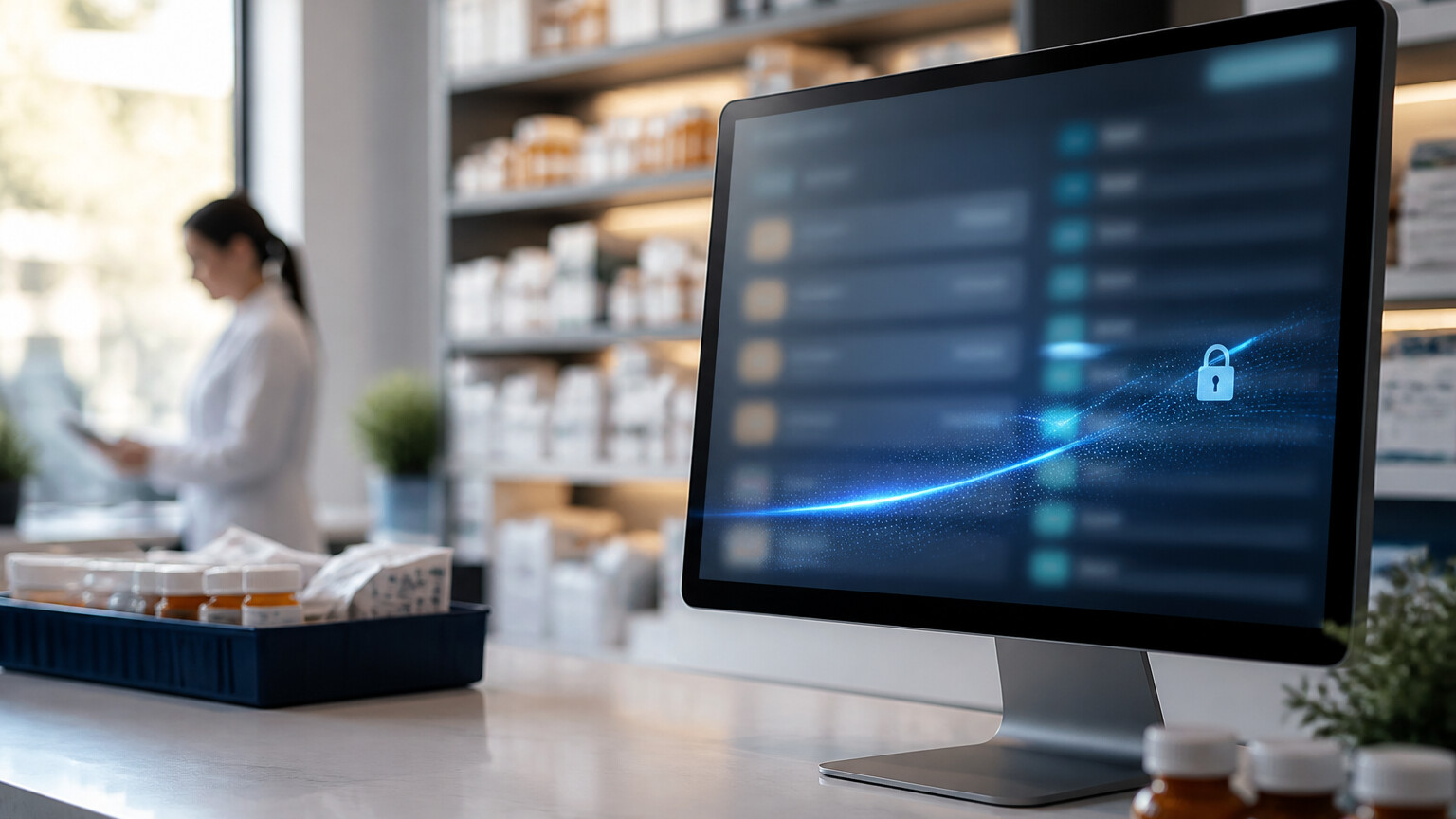
What Does Pharmacy Automation Remember? Where Patient Data Goes When an AI Technician Works Your Queue
Where does patient data go while automation works your queue, and what does it keep when it is done? The question pharmacy owners ask about AI and privacy, and the four things to check before a pilot.
Read article →
September 28, 2026
Running a Pharmacy Through the Technician Shortage: What Owners Ask About Automation
The technician position has been open for months and the work has not slowed. What pharmacy owners ask about automation during a shortage and what the eventual hire walks into.
Read article →
September 21, 2026
Run It Alongside First: How to Pilot Pharmacy Automation Without Betting the Pharmacy
Can I try automation next to what I already do? The question pharmacy owners ask before any pilot, why a parallel pilot works, and five steps to set one up your team can judge.
Read article →
September 16, 2026
What Did Your Pharmacy Automation Do Last Night?
The question pharmacy owners ask most about automation has nothing to do with speed or price. It's: how do I see what it actually did? What a real audit trail looks like, and why the log matters more than the number.
Read article →GET STARTED
See PAT drive your PMS. 30-minute demo.
Show us your PMS. We'll show you PAT running inside it: live, governed, and compliant.